Reflections

Inspired in Arabia

Arabia was a wretched place prior to the advent of Islam. As Jaffer bin Abi Talib told the Najashi of Abyssinia, the Arabs before Islam ‘were plunged in the depth of ignorance and barbarism.’

There was no state and no government. Instead Arabia was inhabited by innumerable tribes. The Arabs recognized no ruler and no law. They only acknowledged the authority of their tribal chiefs. Might was always right and the only protection lay in belonging to a tribe. Assabiyah, unconditional loyalty to your clan, whether they were right or wrong, oppressed or oppressor, was a way of life.

Tribal warfare was the norm. In fact the Arabs courted war, and were consumed by vendattes and counter vendettas.

It was a place of economic inequality: the practice of usury (riba) had made the rich richer and the borrowers poorer. It was also a highly class conscious society. Tribal heads, traders and merchants formed the elite, while the majority of the tribe members were poor, with the slaves occupying the lowest strata of society.

Women were oppressed. They had few rights when it came to marriage, divorce, children, and inheritance. In fact some Pre-Islamic Arabs felt such shame at the birth of a daughter that they would bury her alive.

Drinking, gambling, and promiscuity was widespread.

The dominant religion in Arabia was idol worship. The Arabs supplicated, prostrated, and sacrificed to gods made of stone.

They were a deeply superstitious people who believed in omens- certain days, months, and animals were thought of as good or bad. They would frequent soothsayers and astrologers believing they could foretell the future.

It was against this backdrop, that Allah (SWT) honoured Mohammad (saw) with prophet-hood and commanded him to convey to his people,

‘Worship Allah (alone) and keep away from the taghut (false gods).’ (16:36)

And many Arabs heard what Mohammad (saw) proclaimed and embraced Islam.

These new Muslims would gather in Dar al Arqam where the Prophet (saw) would ensure they arrived at Iman in the correct manner. They were encouraged to contemplate the reality around them, to observe its limits and dependency, and from this conclude that the universe and everything in it had a Creator, and He is Allah. They heard the Quran and concluded it to be the word of God for it rendered them, the masters of the Arabic language, incapable of meeting its challenge and so they were certain that the one who brought the miracle was who he said he was, a Messenger of Allah. They were guided by the Quran and under the tutelage of the Prophet (saw) to build their belief upon the mind and evidence.

Likewise they were guided to seek answers to man’s most fundamental questions that occur inevitably and trouble every man: How did I get here? Why am I here? What follows after this life? They found that the Islamic Aqeedah answered these questions conclusively and convincingly: This universe has a creator that created it and everything in it, and He is Allah. He (SWT) sent Prophet Mohammad (saw) to convey to them the meaning of their existence and how they should proceed in the whole of life. This life has a beginning and an end, after which there will be an accounting of deeds.

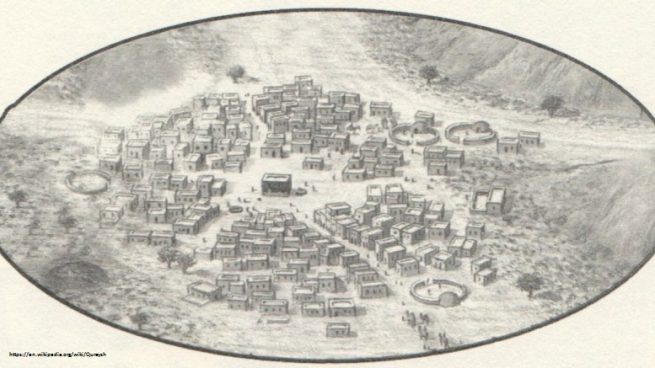
They were intellectually convinced of the truthfulness of the Aqeedah and it inspired these Arabs, the Sahabah of Rasool Allah (saw) to renounce the ‘blind’ beliefs and practices of their society, and to mould themselves into personalities that pleased Allah. It was this firm belief that motivated them to support the Prophet (saw) in his mission of trying to change the dominant thoughts held by Makkan society to those of Islam so as to establish the rule of Allah. They persisted in this despite the torture and suffering inflicted on them by the Quraysh, seeking only to please Allah.

Men like Mus’ab ibn Umair of whom the Prophet (SAW) said,

‘I saw Mus’ab here, and there was no youth in Makkah more petted by his parents than he. Then he abandoned all that for the love of Allah and His Prophet!

who grew up in the lap of luxury, was a fashion icon of his time, and the pride of Quraysh, but who renounced it all for the pleasure of Allah. When his mother heard he had become Muslim, she had him chained and imprisoned in their house, and subsequently disowned him. Mus’ab, however, did not waver.

Men like Bilal ibn Ra’bah whose slave master Umaiya bin Khalaf had him thrown on to the scorching desert sand at the hottest time of the day and kept him down by pacing a heavy rock on his chest. It was said to him,

‘Your gods are lat and Uzza so testify your faith in them’

But Bilal’s belief in Allah was so certain, that although he had no rights and no wealth, was in fact himself property, he endured. His reply was simply,

‘Ahad. Ahad’ (God is one)

Women like Sumayyah bint Khayyat, a freed slave, who despite being old and frail was tortured and beaten. When the Prophet (saw)saw her and her family being tortured, he (saw) comforted them with the words,

‘Your reward is Jannah.’

Sumayyah’s reply was, ‘I can see it, O Messenger of Allah.’

She refused to abandon Islam and paid for it with her life, becoming the first martyr in Islam.

Women like Ramlah bint Abu Sufyan, (Umm Habiba), who was the daughter of Abu Sufyan, the leader of Quraysh and a fierce opponent of Islam. In order to practice her deen freely, she choose to give up her luxurious life and migrate to Abyssinia, where her husband renounced Islam and became a Christian. Despite being in a foreign country, Umm Habib, wanting to hold onto her deen, divorced him and chose not to return to her father’s house.

This belief in Allah transformed a group of unremarkable men and women into the Sahabah of Rasool Allah (saw) who were willing to sacrifice their life, wealth, time and desires for Allah’s sake for

‘Indeed Allah has bought from the Believers their persons and their possessions in return for the Gardens’ (9:111);

men and women who when they recited ‘La illaha ilAllah’ understood the commitment and responsibility it would demand of them, and who remained true to the pledge they made with Allah.

‘Among the believers are men true to what they promised Allah. Among them is he who has fulfilled his vow [to the death], and among them is he who awaits [his chance]. And they did not alter [the terms of their commitment] by any alteration.’ (33:23) 
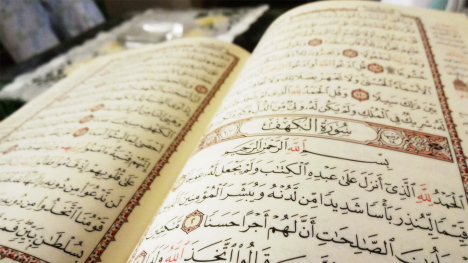
‘bring a single chapter like it…’

It’s no secret that the Quraysh of Makkah met the call of Rasool Allah (SAW) with hostility, slander, persecution, and attempted murder. 

Why, when all the Quraysh had to do, to discredit the Prophet (SAW) and the Message, was to meet the challenge in the Quran?

‘And if you all are in doubt about what I have revealed to My servant, bring a single chapter like it, and call your witnesses besides God if you are truthful.’ (Quran 2:23)

Perhaps the Quraysh did not have the resources or capability to meet the challenge?

Not so… the Quraysh spoke Arabic, the language of the Quran and had amongst them the best poets and orators. It would not have been difficult for them to gather a team of individuals tasked with creating ‘a single chapter like it’.

But, as Walid ibn al-Mughira, one of the leaders of the Quraysh who said of himself,

‘there is none amongst you who knows poetry as well as I do, nor can any compete with me in composition or rhetoric – not even in the poetry of jinns!’ 

admitted,

‘By Allah, I have heard a speech from Muhammad (Quran) that is neither from the speech of men or jinn; the top of it is fertile and beautiful, it has a rhythm and it surpasses everything I’ve heard and nothing can surpass it’;

and in another narration he is reported to have said,

‘I swear by Allah that it is not poetry, nor magic, nor the prattling of insanity. Verily, his speech is from the Words of Allah!’ 

No wonder the Quraysh found it impossible to meet the challenge of the Quran… it’s impossible to compete with the speech of Allah ta’aala.

‘Say: ‘If all mankind and the jinn would come together to produce the like of this Quran, they could not produce its like even though they exerted all their strength in aiding one another.’ (Quran 17:88)

Like their predecessors, the Western powers of today, must resort to thuggery, for they too know, the Quran, the word of God, cannot be replicated.

Alarmed in Arabia

It wasn’t as if the Pagan Arabs didn’t believe that Allah was the Creator of them and the universe… they did.

‘And if you ask them who created them, they will surely say: “Allah.” (43:87)

Say: ‘Whose is the earth and whosoever is therein if you know!’ They will say: ‘It is Allah’s!’ … (23:84-85)

It wasn’t as if in times of calamity they didn’t turn to Allah to save them… they did.

‘He it is Who enables you to travel through land and sea, till when you are in the ships, and they sail with them with a favorable wind, and they are glad therein, then comes a stormy wind and the waves come to them from all sides, and they think that they are encircled therein. Then they invoke Allah, making their faith pure for Him (alone), (saying): ‘If You (Allah) deliver us from this, we shall truly, be of the grateful.’ (10:22)

It wasn’t as though Mohammad (SAW) was a troublemaker, a sworn enemy with whom they had a vendetta …he wasn’t. Mohammad (SAW) belonged to the noblest clan; was loved, respected and highly thought of by his people.

The Quraysh called him Al Ameen (the trustworthy) and As Sadiq ( the truthful). The leaders of the Quraysh were happy for him to resolve the dispute over the black stone:  “Al-Ameen has come. We are content to abide by his decision.”

It wasn’t as though, he was calling them to war, bloodshed, looting and pillaging…no, he (SAW) called them to piety and righteousness

Heraclius said, ‘What does he order you to do?’

Abu Sufyan said, ‘He tells us to worship Allah alone, and not to worship others along with Him, and to leave all that our fore-fathers used to worship. He orders us to pray, give in charity, be chaste, keep promises and return what is entrusted to us.’

And it wasn’t as though the Prophet (SAW) proclaimed the call of La ila ha ilAllah aggressively, coming at the Quraysh wielding a sword. Just the opposite…

‘Invite to the way of your Lord with wisdom and fair preaching, and argue with them with that which is best.’ (16:125)

Yet the Quraysh met the call of Rasool Allah (SAW) with hostility, persecution, bribery, and attempted murder. Why?

Why did they feel so threatened by La ilaha ilAllah?

True, they were not unaware of the existence of Allah. They believed Allah (SWT) created them, sustained them, took back their lives; and, yes, they even called upon Him (SWT) in times of great distress.

But La ilaha ilAllah asked them to take Allah as the sole God. This they did not want to do.

‘Has he made the aliha (gods) (all) into One Ilah (God – Allah). Verily, this is a curious thing!’ (38:5)

For the Quraysh understood that if they took Allah as their sole ‘Ilah’, it would mean a loss of their power, wealth, and status. So they complained to Abu Talib, the Prophet’s uncle,

‘O Abu Talib! Your nephew curses our gods; finds fault with our way of life, mocks at our religion and degrades our forefathers.’

They liked their way of life. They didn’t want it to change. They understood that what Mohammad called to, involved more than merely giving up their idols and pagan gods. It demanded more than individual acceptance and personal conviction. It would mean the restructuring of the whole of society, and no longer would the scales be tipped in their favor.

They, the tribal leaders, the rich traders, would no longer be the ones to set the rules of society. Instead the whole of life would be organized according to Allah’s commands. They didn’t care that Mohammad’s message was one of truth and justice, for the life of wealth and privilege they had built, rested on the oppression of the people.

Alarmed by the Message and fearful of its spread in Makkah and among the neighbouring Arab tribes, the Quraysh mobilized a hostile campaign against the Muslims, which persisted even when they migrated to Madina. Allah (SWT) tells us that this battle between truth and falsehood, between Islam and disbelief, is inevitable:

‘They (the disbelievers and the People of the Book) want to extinguish Allah’s Light (with which Muhammad  has been sent – Islamic Monotheism) with their mouths, but Allah will not allow except that His Light should be perfected even though the disbelievers hate (it). It is He Who has sent His Messenger with guidance and the Deen of truth (Islam), to make it superior over all religions even though the disbelievers hate (it).’ (9:32-33)

And this battle is ongoing… today it’s the Western powers who understand the threat Islam poses to their way of life, and are relentless in their efforts to hinder the revival of Islam as a system for regulating all of life’s affairs. Allah (SWT) tells us,

‘Verily, those who disbelieve spend their wealth to hinder (men) from the Path of Allah, and so will they continue to spend it; but in the end it will become an anguish for them. Then they will be overcome. And those who disbelieve will be gathered unto Hell. (8:36)

Lost in translation

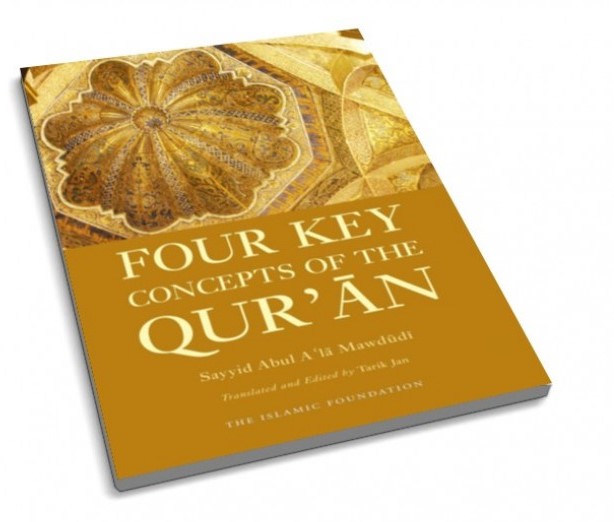
On and off I keep dipping into Sayyid Abul A ‘la Mawdudi’s ‘Four Key Concepts of the Quran’. I find the book to be quite enlightening as Mawdudi goes to great lengths to explain the meaning of four key concepts found in the Quran: Ilah, Raab, Ibadah, and Deen.

He clarifies that over time a decline in interest in the Arabic language, has led to subtle changes in how these terms have come to be understood. So today we do not understand them in the same manner as the original Arabs did, rather our grasp is restricted and vague.

So today,

Ilah means false gods or idols

Rabb means the Provider and Sustainer

Ibadah means ritualistic worship

Deen means religion

Mawdudi demonstrates that the Arabs, to whom the Quran was revealed, who knew their language well, understood the correct and full implication of these words. Those who accepted the call understood the change it sought to bring in their lives and what they had to discard in order to embrace the call, while those who rejected the call knew full well the implications of their failure to defeat it.

In his book, Mawdudi, attempts, with the support of Quranic ayats, to convey the complete significance of these terms so that we can correctly understand the message of the Quran.

He explains that the Arabic dictionary defines Ilah as that which is worshipped, and carries a host of connotations such as the one who is all powerful and exalted, the one who is the provider, protector and comforter, the one who is concealed from the senses and has a mysterious presence.

Mawdudi maintains that the pagan Arabs and past nations mentioned in the Quran, believed in the existence of a Supreme Ilah whom they called ‘Allah’. Their deviation lay in the fact that they believed others – idols made of stone and wood, angels, jinn and saints- had some share in the Supreme God’s Divinity. So they would made dua and offerings to these false gods thinking them to be capable of interceding on their behalf with Allah. This intervention they believed could result in some worldly benefit or ward off some harm.

Mawdudi elaborates that the Quran also uses this same word ilah when it refers to the Pagan Arabs following the orders of their own selfish desires, or of other human beings, such as their tribal chiefs and family elders, without caring to ascertain God’s rule on the matter. These ilah’s are in no way divine; no prayers or sacrificial offerings were offered to them, but the Quran nevertheless imparts divinity to them. They are ‘ilahs’ in the sense that they were looked upon as having the right to decide what was halal and haram, and what they dictated was accepted.

The Quran challenges this whole concept of ilah and makes clear that Allah is the only ilah. It asserts that Godhead can not be split and distributed, and Allah must be regarded as the only ilah in all the different meanings of the word. ‘Take not two ilahs in worship; He is but one ilah…’ (16:51)

Mawdudi elaborates that the Quran makes clear that there is only One Being in the heavens and on earth who possesses all power and authority. All creation is His and is bound by laws made by Him. Thus He alone has the power to alleviate hardship, listen to our prayers, grant us good and protect us from harm. Moreover, since everything owes their existence to Him and He is the sustainer and manager of all life, than He alone has the right to dictate what is right and wrong, halal and haram for the whole of creation. This is all part of Godhead and no one, for they all owe their existence to Him, can lay claim to any part of it.

Likewise, he explains that the word Rabb too has a wide range of meanings. It signifies the one who is the owner and master, the one who nourishes, rears and sustains, the one responsible for improving a situation, the one who is the sovereign, whose word is obeyed, and the one who occupies a focal position.

Mawdudi again stresses that the past nations who strayed did not deny that Allah was the Rabb. But as they had done with regards to the concept of ‘ilah’, they split and distributed its various connotations among the creation of Allah. Consequently they believed others -angels, celestial bodies, man-made gods, spirits, saints, or prophets- shared in Allah’s Rububiyah (qualities and attributes of one who is Rabb) and hence had the power to grant and protect. They refused to discard these other false gods whom they had elevated to the status reserved only for Allah, and so they refused to accept Allah as the Ilah and Rabb who alone deserved worship. Moreover, they took their chiefs, tribal elders, or religious clergy, as lawmakers allowing them to decide what was good or bad for them; believing they had no need for Divine guidance in running their worldly affairs. Allah sent prophets to correct their understanding; prophets who all stressed that what they ascribed to others was the exclusive right of Allah. Mawdudi highlights repeatedly that rububiyah is not divisible, ‘The Quran projects al- Rabb as an Absolute Sovereign with none to share His ownership and governance.’

We than learn that the word ibadah also has several meanings: slavery, bondage, submission, obedience and to show gratitude to the master for his favors. The pre-Islamic nations were quilty of making ibadah to their false ilah’s, be it in the form of ritualistic worship such as supplicating or praying to them or offering them sacrifice, or of accepting these false ilah’s had the right to lay down laws for regulating society. The Quran proclaims all these objects of worship and their ibadat to be wrong. Allah alone is the Lord of all that exists, He alone deserves to be worshipped and so all ibadah must be reserved exclusively for Him.

Mawdudi asserts that Muslims must understand ibadah to encompass all aspects of life whether spiritual or societal, and not just in the ritualistic sense of performing the five daily prayers, fasting, giving Zakat and performing Hajj. It points to a Master and slave relationship, wherein the Master has to be consulted prior to any action.

Lastly, Mawdudi explains the word deen, which also had several connotations among the Arabs. It meant supreme authority, obedience to that authority, laws imposed by that authority, accountability and reward or punishment meted out by the authority. He, however, notes that the word had not attained the status of a formal term until the advent of the Quran.

The Quran makes use of the word in all the varied ways the Arabs employed it, but it also uses deen as a term that comprehensively encapsulate all these various meanings to convey a whole way of life. Mawdudi notes that the Quran equates deen with a system of life wherein man accepts someone as having the ultimate authority and agrees to live by the laws laid down by that authority, hopeful of receiving benefit for complying with the law while fearful of punishment for not. If the laws that man lives by are from Allah than they are in His deen; but if governance belongs to a man-made system, be it a monarch, a priest or a scholar, and people accept that authority than they are followers of that authority’s deen. The Quran makes clear that Islam is the only true deen. Allah is the sole Sovereign, the only One who has the right to lay down rules and laws by which humans live their lives. No other system is acceptable to the Lord of the Universe.

Mawdudi illustrates with ayats from the Quran that deen encompasses more than ritualistic worship. It is an all embracing life system that covers belief, thoughts, rituals, morals, as well as all social, financial, and political aspects of life. He observes that it is difficult to find a word in any language that captures all the meanings summed up by the word deen. According to him, the closest word to deen, would be ‘a state’ meaning a system of governance, and even this word fails to do full justice.

Mawdudi stresses that our corrupted understanding of these terms has made the ‘Quranic intent obscure and difficult to understand’, resulting in obvious flaws in our belief and practices. He warns a person ‘may continue saying la ilaha illAllah – there is none but Allah- and still elevate a multitude of people and philosophies to divinity’ and it is important that these ‘primary concepts’ be fully explained so that we correctly grasp the concept of tawheed and shun its opposite shirk.

Because we believe in Him (SWT)

I recently attended a talk on Prophetic Medicine. The speaker talked of the health benefits of Salah, wudu and fasting, and of not consuming pork and alcohol. Wudu can reduce stress and anxiety; salah improves blood circulation, tones the body and maintains joint flexibility; fasting can lower cholesterol, blood sugar and help to detoxify the body. Pork is full of toxins and bacteria that are harmful to humans and alcohol causes intoxication. We were all so fascinated; we had a scientific basis for justifying these acts of ibadat to our children and even non- Muslims.

The discussion got me thinking.

If Allah Ta’Aalaa, in His wisdom, has not given us a reason for commanding an action or forbidding one, can we presume to know His reason for legislating a rule?

Yes, I know, we’re living in an age of science and medicine, where the benefits of these acts of ibadat can be and have been studied. We find satisfaction in uncovering the ‘why’ behind things and no doubt there is benefit in all that Allah has commanded us with.

But does that give us the right to claim that these perceived benefits are the reason why these ibadat have been prescribed by the Creator?

The truth of the matter is that we do these acts not for their perceived benefit but because we are obligated to do them.

When our children or non- Muslims ask Why: Why do we pray? Why 5 times a day? Why do we fast a whole month? Why is pork forbidden? , what’s wrong with simply saying,

We do it because we are commanded by Allah.

When we are asked such questions instead of inventing reasons from our aql, we should focus the inquirer’s attention on the belief in Allah. We should not discuss these ibadat detached from this belief, trying to convince people of the excellence of these acts based on perceived benefit. Rather, we should rationally prove to them that Allah exists, that the Quran is the word of Allah and the message brought by Mohammad (saw) and make evident that it is this Iman in Allah (SWT) that drives us to accept His commands without question.

Sometimes the simplest answer is the most telling.

“A Bedouin was asked: how do you know your Lord exists? He replied: “Camel dung indicates camels, donkey dung indicates donkeys and footprints indicate travel. So the sky, with its constellations and the seas with its waves, do not these indicate the All-Knowing, the All-Powerful?”

The Bedouin’s analogy is simple yet compelling, as is professing that we do these acts of ibadat because we believe in the Creator who has commanded us to perform them.  

‘Will the Quran speak to me?’


I know the Quran to be a book of guidance, what Muslim doesn’t, right? The Quran itself testifies to this:

‘We sent down the Book to you which makes everything clear, and a guidance and a mercy…’(16:89)

‘Verily this Qur’an doth guide to that which is most right…’(17:9)

‘The month of Ramadan in which was revealed the Qur’an, a guidance for mankind…’ (2:185)

‘And it certainly is a Guide and Mercy to those who believe.’ (27:77)

The Quran answers all those important questions that arise, as we navigate our life on earth:


How did I get here?

Why am I here?

Who is Allah?

What is right and what is wrong?

What will happen to me after death?


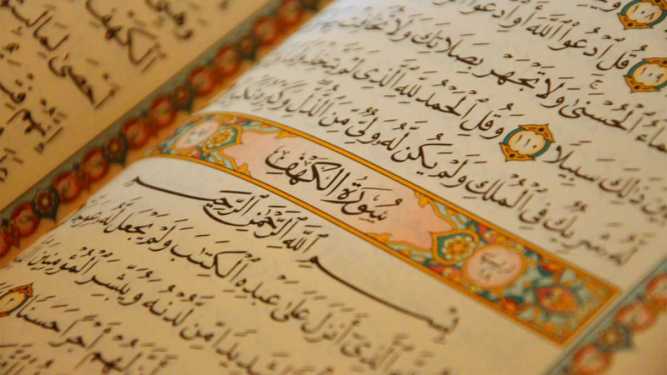
But what caught me by surprise was to learn that the Quran will only truly speak to people with certain qualities. I took it for granted that to read the Quran was to be guided.

But Allah (SWT) says,


‘In which there is guidance for the muttaqin’ (2:2)

Allah (SWT) in Surah Baqarah, calls the people who will benefit from this Book, ‘the muttaqin’ (the God-conscious), and tells us the qualities they possess.

  • They believe in the ‘ghayb’; in all those things which are hidden from our senses, but which the Quran talks about and which the Prophet (saw) has told us of. So they believe in the nature and attributes of Allah, the angels and jinn, heaven and hell, Day of Judgement, the previous Prophets and the previous books.

Those who need to see to believe in these things, or are doubtful about any of the unseen matters revealed in the Quran, will find this Book of little use.

  • They ‘establish Salah’. The muttaqin are aware that merely saying ‘I believe’ is not enough. Thus they steadfastly respond to the mu’adhdhin’s call to prayer five times a day, and try to perform their salah in the most perfect manner. The early scholar Qatada explained:


‘The establishing of the prayer is to stick to and guard its timing, ablution, bowing and prostration.’

Ibn Abbas, the companion of Rasool Allah (SAW) said: ‘Establishing the prayer is to perform its bowing, prostrations and reciting in a complete manner as well as having fear of Allah and complete attention to it.’

Those who do not pray, or pray once in a while, or those who do not give due attention to all the necessary prerequisites of Salah, will find this Book of little use.

  • They spend out of what Allah (SWT) has give them. They share their wealth, as zakat and sadaqa, with others who are less fortunate, all the while recognising that whatever they possess belongs to Allah.

Those who do not believe that others have a rightful claim on what Allah has blessed them with or are unwilling to part with their wealth will find this Book of little use.


  • They believe in what  has been revealed to Prophet Mohammad (SAW) and what was revealed to the previous messengers. They believe that Allah (SWT) has sent successive messengers, since the dawn of human life, to guide man to the worship of Allah alone.

Those who reject or doubt any of the revelations Allah has sent down; those who think it unnecessary to receive guidance from Allah, through the agency of the messengers, to regulate man’s conduct in life and organise the affairs of society, and would rather rely on their own Aql, or a saint, or another human being for guidance, will find this Book of little use.

  • They are certain of the Hereafter. They know they will be raised up to stand before Allah and will have their deeds, good and bad, judged by Him (SWT), an accounting that will lead to heaven or hell.

Those who reject or have doubts with regards to the Hereafter will find this Book of little use.

So next time you read, ask yourself ‘Will the Quran speak to me?’


‘tell us of what He is made, whether of gold, silver or iron?’

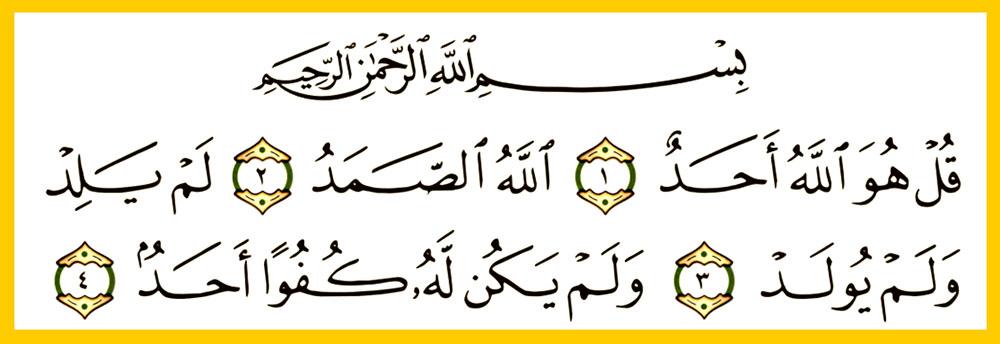
I have been reading the Tafsir of Surah Ikhlas, and been blown away, as always, by the Quran’s ability to convey its message with such a beautiful economy of words.

The Arabs of Makkah asked Mohammad (SAW),

‘Tell us of the ancestry of your Lord.’

‘Is He made of gold, silver or iron?’

So Allah commanded the Prophet (SAW) to tell them,

هُوَ اللَّهُ, He is Allah

I am not asking you to worship a new God. You already know the One I am asking you to worship, the One you call Allah. He is the One you believe created the Universe and created you; the One you believe sends down rainwater; the One you say sustains everything in the Heavens and on earth; the One you turn to in times of calamity; the One you know to bestow life and death.

Now the Makkan Arabs did believe in the existence of Allah, but they had a corrupted view of Allah. They believed Him to be the Supreme God, but they also believed angels, jinn, and man-made idols shared in His divinity. These gods and goddesses, they believed, were their ‘intercessors with Him’ (10:18), who could bring them ‘closer to Allah’ (39:3).

To these gods they gave a shape and a body. Their gods ate food and drank water, which their devotees would prepare and offer them. They shaped these gods with their own hands, of stone, and wood, gold and silver. Hubal, the chief god of the Quraysh, was made of red agate, in the form of a man. When it came into their possession the right hand was broken off, and they made for it a hand of gold.
No wonder the Makkan Arabs asked the Prophet (SAW),

‘Is He made of gold, silver or iron?’

Their gods had wives and their goddess had husbands- they had children, brothers and sisters. Thus it was natural for them to assign children to Allah. They regarded the angels and also the three goddesses, al Laat, al Uzza, and Manaat, as ‘God’s daughters’. The Hejaz had shrines dedicated to the worship of these idols.
So of course they asked,

‘What is His ancestry?’

And though they believed in Allah as the Supreme God, He was not the object of their ritual worship. Instead the Arab polytheists called on these idols in times of hardship, made sacrifice in their name, and performed pilgrimage to them.

And when it came to the rules by which they lived? They knew al Laat, al Uzza, and Manaat had nothing to offer in the way of guidance, but nor did they believe Allah had any say in the day to day affairs of life. Instead they took their tribal chiefs as lawmakers, allowing them to decide the do’s and don’ts of life.

So the Prophet (SAW) was commanded to tell them, Allah is

أَحَدٌ , One

He has no partners, no helpers, no rivals. He has no second. He is indivisible. He alone is the Creator. He alone sustains and administers the Universe and all that it contains. He alone is God and Sovereign of all that exists. He alone is the One who is to be worshipped and obeyed.

The Prophet (SAW) was commanded to tell them, Allah is

الصَّمَدُ, the Eternal Refuge

He is ever-living. He has no beginning and no end. He is independent and self- subsisting; needing neither food nor drink. He is Perfect, free from weaknesses and flaws. He is the One man turns to in times of need and for fulfilment of his desires; the One who heals and cures. He is the Master of all creation, who has no superior and who has complete control, while all that is in the heavens and on earth are His servants.

The Prophet (SAW) was commanded to tell them,

لَمْ يَلِدْ وَلَمْ يُولَد , He neither begets nor is born

He does not have any children, nor was He fathered. Allah, glory be to Him, has no spouse, no child, no parents.

The Prophet (SAW) was commanded to tell them,

وَلَمْ يَكُن لَّهُ كُفُوًا أَحَدٌ , and there is nothing comparable to Him

My Lord is not made of any type of thing. He is Unique; there is no one that resembles Allah in His attributes, His actions, His supremacy.

Surah Ikhlas with a few choice words clarified the nature of Allah. It made clear to the Arab polytheists that there is no God, but Allah, calling on them to discard all false gods and completely submit to the One whom they already acknowledged as their Creator.

SubhanAllah

We find in the Glorious Quran, countless ayat (the signs of Allah) that remind us of Allah’s greatness, glory, and perfection.

In Surah An Nahl (16:10-16), Allah (SWT) says:

10. He it is Who sends down water (rain) from the sky; from it you drink and from it (grows) the vegetation on which you send your cattle to pasture;

11. With it He causes to grow for you the crops, the olives, the date-palms, the grapes, and every kind of fruit. Verily! In this is indeed an evident proof and a manifest sign for people who give thought.

12. And He has subjected to you the night and the day, the sun and the moon; and the stars are subjected by His Command. Surely, in this are proofs for people who understand.

13. And whatsoever He has created for you on this earth of varying colours [and qualities from vegetation and fruits, etc. (botanical life) and from animal (zoological life)]. Verily! In this is a sign for people who remember.

14. And He it is Who has subjected the sea (to you), that you eat thereof fresh tender meat (i.e. fish), and that you bring forth out of it ornaments to wear. And you see the ships ploughing through it, that you may seek (thus) of His Bounty (by transporting the goods from place to place) and that you may be grateful.

15. And He has affixed into the earth mountains standing firm, lest it should shake with you, and rivers and roads, that you may guide yourselves.

16. And landmarks (signposts, etc. during the day) and by the stars (during the night), they (mankind) guide themselves.

Subhan Allah! Glory be to You O Allah,You and only You are the Creator of all that exists in the heavens and on earth, the only One worthy of Worship. All praise is Yours, You are free from every imperfection.

We all have our own personal WOW moments, when we reflect on the beautiful creation of Allah and quite spontaneously proclaim Subhan Allah! Some of mine are:

  1. the smell and taste of freshly sliced watermelon on a hot day
  2. watching a new leaf unfurl on my houseplants
  3. the seemingly effortless ability of skin to repair itself after a cut
  4. watching a bird glide in the sky, unaffected by the pull of gravity
  5. the miracle that is water
  6. the bond between parents and their children
  7. how everything in creation is subject to the physical laws of Allah.

Subhan Allah!

“All the praises and thanks be to Allah. He will show you His Ayat and you shall recognise them. And your Lord is not unaware of what you do.” (27:93)

What are your personal favorite WOW moments?