
Because we believe in Him (SWT)

I recently attended a talk on Prophetic Medicine. The speaker talked of the health benefits of Salah, wudu and fasting, and of not consuming pork and alcohol. Wudu can reduce stress and anxiety; salah improves blood circulation, tones the body and maintains joint flexibility; fasting can lower cholesterol, blood sugar and help to detoxify the body. Pork is full of toxins and bacteria that are harmful to humans and alcohol causes intoxication. We were all so fascinated; we had a scientific basis for justifying these acts of ibadat to our children and even non- Muslims.

The discussion got me thinking.

If Allah Ta’Aalaa, in His wisdom, has not given us a reason for commanding an action or forbidding one, can we presume to know His reason for legislating a rule?

Yes, I know, we’re living in an age of science and medicine, where the benefits of these acts of ibadat can be and have been studied. We find satisfaction in uncovering the ‘why’ behind things and no doubt there is benefit in all that Allah has commanded us with.

But does that give us the right to claim that these perceived benefits are the reason why these ibadat have been prescribed by the Creator?

The truth of the matter is that we do these acts not for their perceived benefit but because we are obligated to do them.

When our children or non- Muslims ask Why: Why do we pray? Why 5 times a day? Why do we fast a whole month? Why is pork forbidden? , what’s wrong with simply saying,

We do it because we are commanded by Allah.

When we are asked such questions instead of inventing reasons from our aql, we should focus the inquirer’s attention on the belief in Allah. We should not discuss these ibadat detached from this belief, trying to convince people of the excellence of these acts based on perceived benefit. Rather, we should rationally prove to them that Allah exists, that the Quran is the word of Allah and the message brought by Mohammad (saw) and make evident that it is this Iman in Allah (SWT) that drives us to accept His commands without question.

Sometimes the simplest answer is the most telling.

“A Bedouin was asked: how do you know your Lord exists? He replied: “Camel dung indicates camels, donkey dung indicates donkeys and footprints indicate travel. So the sky, with its constellations and the seas with its waves, do not these indicate the All-Knowing, the All-Powerful?”

The Bedouin’s analogy is simple yet compelling, as is professing that we do these acts of ibadat because we believe in the Creator who has commanded us to perform them.  
‘Will the Quran speak to me?’


I know the Quran to be a book of guidance, what Muslim doesn’t, right? The Quran itself testifies to this:

‘We sent down the Book to you which makes everything clear, and a guidance and a mercy…’(16:89)

‘Verily this Qur’an doth guide to that which is most right…’(17:9)

‘The month of Ramadan in which was revealed the Qur’an, a guidance for mankind…’ (2:185)

‘And it certainly is a Guide and Mercy to those who believe.’ (27:77)

The Quran answers all those important questions that arise, as we navigate our life on earth:


How did I get here?

Why am I here?

Who is Allah?

What is right and what is wrong?

What will happen to me after death?


But what caught me by surprise was to learn that the Quran will only truly speak to people with certain qualities. I took it for granted that to read the Quran was to be guided.

But Allah (SWT) says,


‘In which there is guidance for the muttaqin’ (2:2)

Allah (SWT) in Surah Baqarah, calls the people who will benefit from this Book, ‘the muttaqin’ (the God-conscious), and tells us the qualities they possess.

  • They believe in the ‘ghayb’; in all those things which are hidden from our senses, but which the Quran talks about and which the Prophet (saw) has told us of. So they believe in the nature and attributes of Allah, the angels and jinn, heaven and hell, Day of Judgement, the previous Prophets and the previous books.

Those who need to see to believe in these things, or are doubtful about any of the unseen matters revealed in the Quran, will find this Book of little use.

  • They ‘establish Salah’. The muttaqin are aware that merely saying ‘I believe’ is not enough. Thus they steadfastly respond to the mu’adhdhin’s call to prayer five times a day, and try to perform their salah in the most perfect manner. The early scholar Qatada explained:


‘The establishing of the prayer is to stick to and guard its timing, ablution, bowing and prostration.’

Ibn Abbas, the companion of Rasool Allah (SAW) said: ‘Establishing the prayer is to perform its bowing, prostrations and reciting in a complete manner as well as having fear of Allah and complete attention to it.’

Those who do not pray, or pray once in a while, or those who do not give due attention to all the necessary prerequisites of Salah, will find this Book of little use.

  • They spend out of what Allah (SWT) has give them. They share their wealth, as zakat and sadaqa, with others who are less fortunate, all the while recognising that whatever they possess belongs to Allah.

Those who do not believe that others have a rightful claim on what Allah has blessed them with or are unwilling to part with their wealth will find this Book of little use.


  • They believe in what  has been revealed to Prophet Mohammad (SAW) and what was revealed to the previous messengers. They believe that Allah (SWT) has sent successive messengers, since the dawn of human life, to guide man to the worship of Allah alone.

Those who reject or doubt any of the revelations Allah has sent down; those who think it unnecessary to receive guidance from Allah, through the agency of the messengers, to regulate man’s conduct in life and organise the affairs of society, and would rather rely on their own Aql, or a saint, or another human being for guidance, will find this Book of little use.

  • They are certain of the Hereafter. They know they will be raised up to stand before Allah and will have their deeds, good and bad, judged by Him (SWT), an accounting that will lead to heaven or hell.

Those who reject or have doubts with regards to the Hereafter will find this Book of little use.

So next time you read, ask yourself ‘Will the Quran speak to me?’


‘tell us of what He is made, whether of gold, silver or iron?’

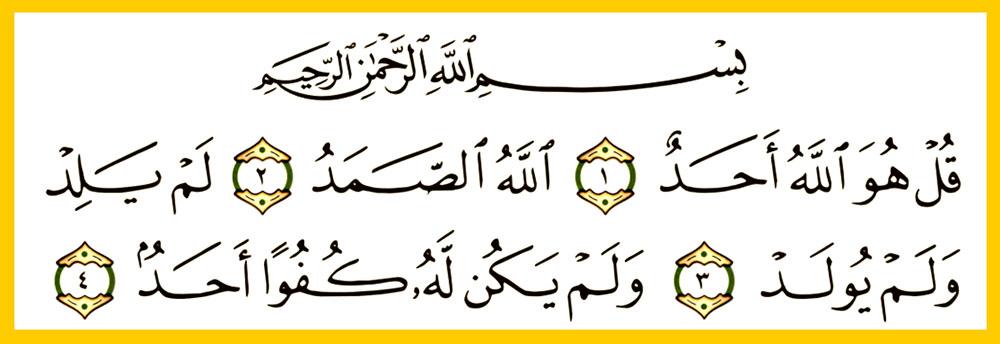
I have been reading the Tafsir of Surah Ikhlas, and been blown away, as always, by the Quran’s ability to convey its message with such a beautiful economy of words.

The Arabs of Makkah asked Mohammad (SAW),

‘Tell us of the ancestry of your Lord.’

‘Is He made of gold, silver or iron?’

So Allah commanded the Prophet (SAW) to tell them,

هُوَ اللَّهُ, He is Allah

I am not asking you to worship a new God. You already know the One I am asking you to worship, the One you call Allah. He is the One you believe created the Universe and created you; the One you believe sends down rainwater; the One you say sustains everything in the Heavens and on earth; the One you turn to in times of calamity; the One you know to bestow life and death.

Now the Makkan Arabs did believe in the existence of Allah, but they had a corrupted view of Allah. They believed Him to be the Supreme God, but they also believed angels, jinn, and man-made idols shared in His divinity. These gods and goddesses, they believed, were their ‘intercessors with Him’ (10:18), who could bring them ‘closer to Allah’ (39:3).

To these gods they gave a shape and a body. Their gods ate food and drank water, which their devotees would prepare and offer them. They shaped these gods with their own hands, of stone, and wood, gold and silver. Hubal, the chief god of the Quraysh, was made of red agate, in the form of a man. When it came into their possession the right hand was broken off, and they made for it a hand of gold.
No wonder the Makkan Arabs asked the Prophet (SAW),

‘Is He made of gold, silver or iron?’

Their gods had wives and their goddess had husbands- they had children, brothers and sisters. Thus it was natural for them to assign children to Allah. They regarded the angels and also the three goddesses, al Laat, al Uzza, and Manaat, as ‘God’s daughters’. The Hejaz had shrines dedicated to the worship of these idols.
So of course they asked,

‘What is His ancestry?’

And though they believed in Allah as the Supreme God, He was not the object of their ritual worship. Instead the Arab polytheists called on these idols in times of hardship, made sacrifice in their name, and performed pilgrimage to them.

And when it came to the rules by which they lived? They knew al Laat, al Uzza, and Manaat had nothing to offer in the way of guidance, but nor did they believe Allah had any say in the day to day affairs of life. Instead they took their tribal chiefs as lawmakers, allowing them to decide the do’s and don’ts of life.

So the Prophet (SAW) was commanded to tell them, Allah is

أَحَدٌ , One

He has no partners, no helpers, no rivals. He has no second. He is indivisible. He alone is the Creator. He alone sustains and administers the Universe and all that it contains. He alone is God and Sovereign of all that exists. He alone is the One who is to be worshipped and obeyed.

The Prophet (SAW) was commanded to tell them, Allah is

الصَّمَدُ, the Eternal Refuge

He is ever-living. He has no beginning and no end. He is independent and self- subsisting; needing neither food nor drink. He is Perfect, free from weaknesses and flaws. He is the One man turns to in times of need and for fulfilment of his desires; the One who heals and cures. He is the Master of all creation, who has no superior and who has complete control, while all that is in the heavens and on earth are His servants.

The Prophet (SAW) was commanded to tell them,

لَمْ يَلِدْ وَلَمْ يُولَد , He neither begets nor is born

He does not have any children, nor was He fathered. Allah, glory be to Him, has no spouse, no child, no parents.

The Prophet (SAW) was commanded to tell them,

وَلَمْ يَكُن لَّهُ كُفُوًا أَحَدٌ , and there is nothing comparable to Him

My Lord is not made of any type of thing. He is Unique; there is no one that resembles Allah in His attributes, His actions, His supremacy.

Surah Ikhlas with a few choice words clarified the nature of Allah. It made clear to the Arab polytheists that there is no God, but Allah, calling on them to discard all false gods and completely submit to the One whom they already acknowledged as their Creator.